RIDETZ – The Foundation for Tomorrow Bike Ride: Kilimanjaro to the Coast
•January 19, 2012 • Leave a CommentTHAILAND is for FAMILIES
•January 3, 2012 • Leave a CommentOrchids, noodles, cilantro, tuk-tuks, scooters, bikes, pork, colorful festivals, turquoise waters, long-tail boats, karst, Buddhas…
These are just a few things that come to mind when thinking back on a recent trip to Thailand with the family. If there ever was a country made for hosting families it is Thailand. People could not be more warm, receptive and hospitable when it comes to traveling with kids. There is a special connection between Thai people and children,a certain interest and obsession unique to the people of Thailand.
We began our trip hesitantly in Bangkok and quickly moved North to Chang Mai ( Thailand’s 2nd largest city but nothing in comparison to Bangkok) for the Loy Krathlong festival marking the end of the monsoons. Three days of celebrations in which parades, street food, and beautiful lit lanterns fill the streets and air. Once we’d had our fill of festivities and tuk-tuk rides, yes kids LOVE zipping through the street in these little contraptions, we headed out into the countryside to the laid back town of Pai. Over the past few years Pai has crept on to the tourist radar but still remains a nice escape from the Chang Mai, if you can handle the curvy ride ( 724 curves in all) to get there.
In Pai we tracked down a bike with a child’s seat( an adventure in itself) giving us the freedom to explore the surrounding countryside at our own pace. We cycled past rice fields, temples, monks, pigs, water buffalo and through small communities stopping for anything or anyone that caught our eye.
Moving on from the hills of the North to the Southern Peninsula and it’s pristine, postcard beaches.First stop, Railey beach. A trip to Thailand for climbing enthusiasts would not be complete without a sojourn at what might be one of the most beautiful beaches on earth. The dramatic karst outcroppings that flank both end of the beach as well as the bay in which it sits is difficult to put into words. You have to go there to feel it. The climbing is world-class and not to be missed. Our little 2yr old had fun rock hopping and trying to clamber up the beach front bolted routes. Alas this wasn’t a climbing trip for us but we did manage to sneak in a few fun climbs.
From Railey beach we ventured further into the Phang Nga Bay to a lesser known island Kho Yao Noi. Home to a few thousand locals, this mostly Muslim inhabited island, offers those willing to sacrifice beautiful beaches a chance to experience a Thailand most tourist will never see. A small, emerging climbing scene and tranquil sea kayaking out the front door as well as endless chicken satay and spicy green papaya salad were a welcome escape from the hoards of island hopping tourists.
As we sped away from Kho Yao Koi , Remie, our dynamic 2 yr old, blew kisses to the shores and shouted “a tout bientot!” There is no denying Thailand is an amazing countries on many levels full of contrasts and jaw dropping beauty but most of all the warm and caring people make it a special place. Thailand truly is a gem of a destination for families.
Adventure International – Featured Trips 2012 Brochure
•November 11, 2011 • Leave a CommentFeatured in KLM In Flight Magazine – Into Africa
•May 19, 2011 • Leave a Comment
“Don’t try and be strong and brave. If you need to come to the mess tent, get an askari [guard] to escort you. It’s only a hundred yards, but we’ve had lionesses here. I don’t want to be pulling you out of her teeth, it’ll be hard work, and I don’t have toothpicks!”
Julius, the maître d’, is smiling warmly all the way through this speech. It’s hard to take him seriously. It’s hard to remember that for all the sweeping plains, scrubby acacia, and the elegant cheetahs surveying the horizon, Africa really is dangerous.
A strict ban on poaching in Tanzania has resulted in animals that are literally fearless. Driving from the airport, we are surrounded by 200 buffalo (a particularly unusual traffic jam). Buffalo don’t respect schedules.
Manyara Ranch Conservancy is a luxury tented camp in 35,000 acres of land. This is a landscape that is a character in its own right: willowy figures with sticks walk beside dusty caravans of cows, their Maasai blankets billowing in the blasting sun.
Casually teeming with animals, Manyara is a corridor between two major game parks. Giraffes, zebra, wildebeest and lions all amble into sight a few hundred yards from our armchairs, and not a fence to be seen. And all this is just an hour’s drive from the city of Arusha. Mount Meru and Mount Kilimanjaro flank the park, towering over it like protective forces.
Mount Kilimanjaro (Kili, as she’s affectionately known locally) is begging to be climbed. Packing arctic sleeping bags and thermal underwear down at sea level seems surreal, but it’s necessary. Climbing Kili is a physical, mental and spiritual journey, not to be undertaken lightly, and it involves porters, guides and serious camping.
The summit is often prioritised over the lower slopes through the forest, but these are stunning in their own right. There are five or six routes up to the real slog, some of which are a conveyor belt of foot traffic. The lower foothills of the western Lemosho route are the least walked, most pristine and biologically and ecologically fascinating.
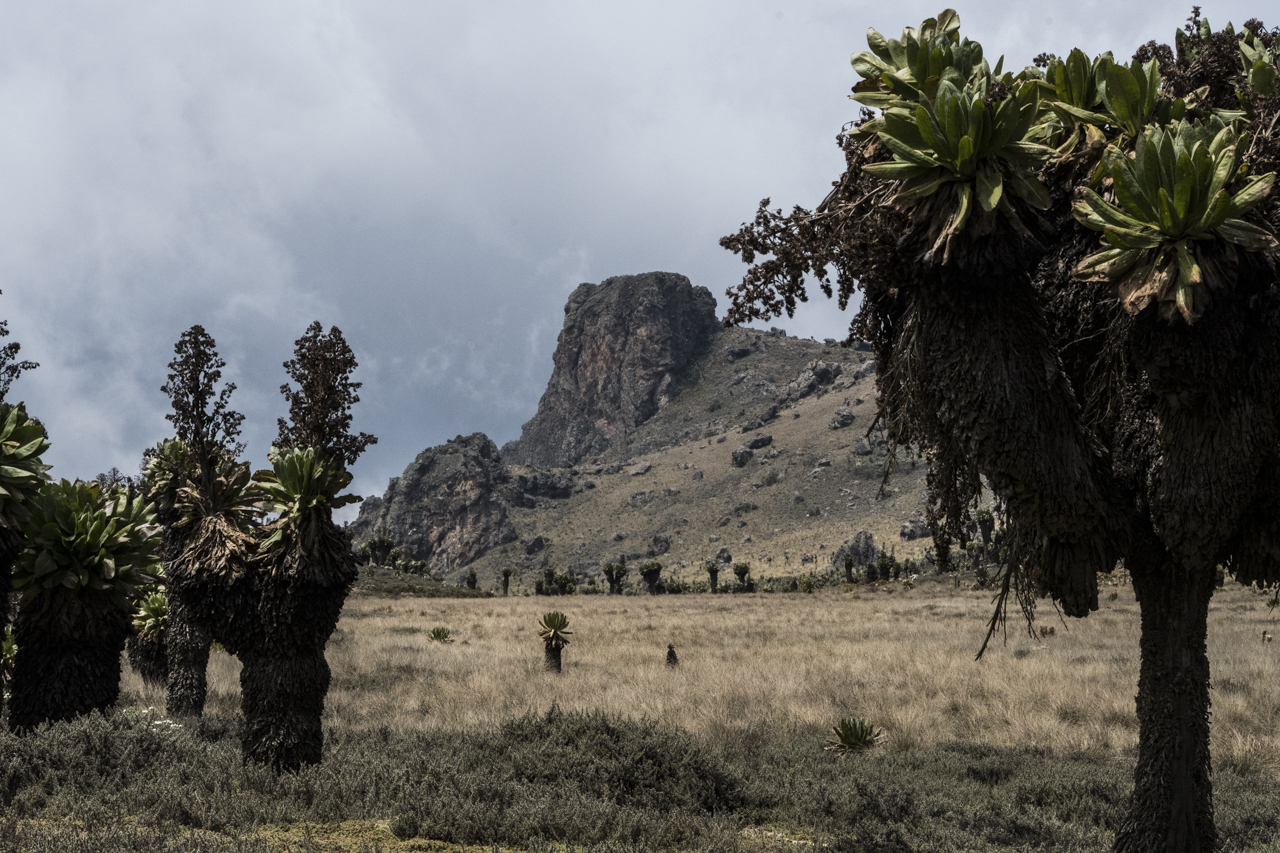
The first day and a half is through forest – an Avatar set of gushing organic growth, sweating fertility, chaos and abundance. Above 3,000m, bizarre alien forms dominate – giant lobelias, dusky lichens and heathers.
After the rigours of Kili, pampering is called for. Heading east to Zanzibar, the spicy promise of fish banquets and massage beckons. The practice of massage in Zanzibar hails from the Persian and Omani occupations. The Singo Scrub is a vigorous affair, traditionally enjoyed by women preparing to marry. The ‘bride’ is splattered with dried and pounded ylang-ylang, jasmine and rose petals, local herbs, sandalwood and cloves, followed by an oil massage.
Fully cleansed and purified, we go to the evening open-air food market in Forodhani. The speciality is pwesa (barbecued octopus, thought to improve virility), and the (secret recipe) soup, containing tamarind, cassava and potato.
Chefs working on fiercely burning braziers compete for custom. Bantering and gossiping in their white hats, whilst the local dhows (ancient wooden fishing boats) begin another night’s fishing in the Indian Ocean. The smells of oud (frankincense) and barbecue smoke mingle, as local Zanzibari families show off their finery, and stray cats skulk for leftovers.
Two exhilarating hours away in a six-seat plane, and a million miles away scenically, is the Ruaha Game Reserve. There is nothing on the airstrip apart from a lone giraffe. No sleepy official, no hut, no customs check, no tarmac, no lights, no billboards, telegraph poles, signs or advertising. Driving along small dirt tracks to the reserve, there are stately, ancient baobabs everywhere, with their bark stripped back around the trunks.
“It’s the elephants,” explains Mollel, the guide. “They eat the bark for moisture in the dry season.” This is a bleak, harsh, unforgiving landscape with occasional dashes of colour from ‘toothbrush trees’. Their bright red pods taste like pistachio nuts. It is hard to imagine this exploding rudely into colour after the rains. The baobabs are the oldest tree, many thousand years old, testimony to slow growing and prehistoric life. The first mention of the baobab is by Ibn Battuta, a Moroccan trader and historian, who wrote in 1353, “The trees are of a great age and size, a caravan can shelter under a single one of them, some have no branches or leaves, but the trunk gives enough shade to shelter many men; some have rotted inside, and rainwater has collected, as if it were a well.” I expect to see a dinosaur gently wandering amongst the branches.
In reality, Ruaha is teeming with impala, duiker, and giant kudu with their huge ears. Giraffes and zebras work in coalition (zebras have an excellent sense of smell, giraffes excellent eyesight) as do baboons and impala: baboons shake the leaves of the high trees, impala stay below (again, good eyesight and smell). It’s all about survival and working together. I almost feel sorry for these animals: life is a neurotically tense experience.
No wildlife documentary can prepare you for the thud of your own heart as a matriarch elephant purposefully eyes you across open savannah.
She is 20 metres away, her one-year-old baby snuggling up under chest and trunk, peeping out. The jeep wheels make unhelpful groaning sounds, as the tyres embed deeper and deeper into the sand of a completely dry river bed.
“It’s fine, watch her ears” says Mollel. “She’s not angry, just curious.” Still, seven tonnes of mammal defending her offspring is something to be taken seriously.
The really good guides seem to understand the porini (bush) in a feral, intuitive way, smelling animals long before they are seen. Pen de Vries has a constant, reassuring and informative commentary about everything from animal behaviour to the gender of dung.
“See the lion?” says De Vries. “He’s about nine, look at the black tinges on his mane, and he’s hungry – see the hollow in his tummy? The way he’s lowered his shoulders?” He mimics a hyena and the lions sit up, alert. “There’s much more co-operation between animals than we realise, more monogamy and less aggression, but we often choose not to see it.”
In the Selous, west of Ruaha, the animals are more skittish and shy. Abandoning the jeep, we set off on foot.
Giraffe run away, their movement a comic miracle.
Locals maintain that engineers build the roads in the parks following the paths of elephants, which seem to have an uncanny ability to get around quickly and directly.
I take a boat down the massive, soupy Rufiji River with ‘professor’ Frank: grinning macabre crocodiles slip silently into the water. Hippo ears and eyes poke out from the brown water. There’s no noise. Literally none. It’s the oddest feeling. I look on the map. I am not sure I have ever been so far from human habitation.
The engine conks out on a sandbank. Frank and I swirl in hopeless confusion, not working as a team. It’s getting dark, we are stuck with a broken boat in a river 500 metres wide and teeming with crocs. We paddle slowly to the shore, using the current. Then we clamber out. We stride along the bank of the river. First there are hippo tracks, then elephant, many waterbuck, eland, impala, then leopard, then lion. All are freshly imprinted. Frank is unnecessarily jolly.
Clinking gin and tonic later, with another glorious sunset in the distance, I surrender to being a colonial princess (queen even), and try not to feel bad about such blatant indulgence. Safaris in Tanzania are about selling a fantasy, complete with outfits: whether it’s Livingstone, Burton and Speke, complete with suede desert boots, white linen, safari suits, topis and mad moustaches, or beds turned down at night with frangipani flowers on the pillows and outdoor showers overlooking zebras sipping at the water hole.
“Tanzanian civility is deep in our country – maybe it’s the Arab influences, maybe it’s our ancient African ways,” says Frank, winking as he talks.
It’s hard to disagree.
Tanzania fact file
GETTING THERE
KLM operates five flights per week to Dar es Salaam International Airport via Kilimanjaro International Airport, from Amsterdam Airport Schiphol.
GUIDES AND SAFARIS African Adventures: Winner of the Condé Nast Award for Ecotourism, this established and well-organised, ethical tour operator will take you up Kilimanjaro and around Tanzania (Frank Castro; info@adventure-international.com / www.adventure-international.com). African Environments: A well-established firm capable of organising trips in Tanzania and bordering countries (www.africanenvironments.co.tz). George Mavroudis: Friendly, efficient, professional and highly knowledgeable guide (www.gmsafaris.com; +255 784290100).
WHERE TO STAY
&Beyond: Luxury lodges in Tanzania, excellent hotel overlooking Ngorongoro Crater (www.andbeyond.com). Kisima Ngeda: (www.kisimangeda.com; +255 272548715).
Ilboru Safari Lodge: Friendly, mid-range/budget hotel in a great location in Arusha, with a pool and a good restaurant, with campsite for budget options (www.ilborusafarilodge. com).
AfrikaAfrika: Five small personal resorts in great locations around Tanzania: subtly designed, fantastic guides, flexible, thoughtful, and reasonably priced (www.afrikaafrikasafaris.com). Manta Resort: Private resort on Pemba Island with superb diving facilities, and innovative community work, superlative beach and service (www.themantaresort.com; gm@themantaresort.com). Manyara Ranch Conservancy: Private conservancy in a corridor between two major game parks: excellent game viewing an hour outside of Arusha. See image bottom left for tent interior (www.manyararanch.com).
WELLNESS Mrembo Traditional Spa: a locally run spa in Zanzibar using professionally trained masseuses and all local Zanzibari flowers, herbs and cleansing traditions (mtoni. com; +255 242250140). Breathing Space: for yoga/ bodywork treatments in a beautiful rural retreat near Arusha (breathingspacetz. com; Stacia Soysal +255 769548787).
For yoga classes around Tanzania, contact Jo Fox (+255 773271942; fox_jo@hotmail.com).
FURTHER INFO
Independent park permits can take time, but both of these can help: Ngorongoro Conservation Authority (ngorongorocrater.org), TANAPA (www.tanzaniaparks.com).
DON’T FORGET
You can take this magazine with you, or read this article again at www.holland-herald.com
Morocco – Zawiya Ahansal, Middle Atlas Mountains
•May 15, 2011 • Leave a CommentThere are certain countries that we are drawn to as travelers and others we are repelled by and others which evoke a feeling of indifference- this was Morocco for me. However, to my surprise Morocco overwhelmed my senses with it’s harsh contrasts in people and landscapes.
This trip took us far from the Moroccan tourist circuit to the region of one of the oldest zawiyas (holy center) in Morocco. Located in the Middle Atlas Mountains, the westernmost of three Atlas Mountain chains, which defines a large plateau basin extending eastward into Algeria. Blanketed in snow throughout the winter they are home to extensive Atlas cedar forests, freshwater lakes, mountain springs and the Barbary Macaque – an endangered primate.
Despite its seemingly remote location Zawiya Ahansal was established on the original caravan route over the Atlas Mountains from Timbuktu and quickly became a center for learning and knowledge. Ironically, today, it is the second poorest region in Morocco measured by its extremely high illiteracy rates, complete lack of healthcare, and continued subsistence living.
After a long, and often nail biting, 6 hour drive from Marrakesh we finally caught a glimpse of our destination- Amzeray in the region of Zawiya Ahansal. The contrasting verdant green valley floor seemed to give life the brown, inhospitable mountain bases.
Hotel Dar Ahansal http://darahansal.net/ is the only hotel among the four villages in the region. Run local mountain guide Yousseff Oulcadi the hotel is the perfect spot from which to base your exploration. The rooms are tastefully decorated with local rugs and tiles, and the food is the best you will eat anywhere in Morocco.
Bringing our experience even more to life was Cloe Erickson, an American architect who fell in love with the region and people on a climbing trip in 2003. Since then Cloe has personally been responsible for a variety of community development projects including renovation of the historic Igherms , grassroots mid-wife program, and providing community centers which provide a variety of community outreach. She recently founded the Atlas Cultural Foundation www.atlasculturalfoundation to further support the local efforts.
Following the Ahansal River upstream you eventually arrive at the small community of Taghia, accessible only by foot or donkey. This isolated community, famous, only to select climbers, for its stunning and expansive limestone cliffs, marks the original settlement due to its proximity to the abundant water source flowing out of the limestone cliffs. The valley floor from Amzerzy to Taghia is terraced fields yielding small crops of winter wheat and corn, and small orchards produce figs, apples, almonds, walnuts and peaches.
Some 80km away is the next significant valley of Ait Bouguemez. Known by locals as the ‘happy valley’, Ait Bouguemez sits in a broad, lush valley at the base of North Africa’s second highest mountain Jbel M’Goun (4069 m). As a result of it’s proximity to the high mountains this valley has become a jumping off point for climbers and trekkers wanting to explore the Middle Altas. Peppered throughout the valley one can find several comfortable hotels and small gites.
La Casbah du Mgoun http://www.hotel-ait-bouguemez.com an old Casbah, as the name indicated, sits perched high and mighty in the middle of the valley. The rooms are very basic but overall it is the best option in this valley for it’s views and communal atmosphere.
On the drive back to Marrakesh the mountains quickly turn to hills, and the hills slowly fade into expansive plains, as you are drawn into the two distinct worlds of old and new in Marrakesh.
Peru – Inkaterra and Titilaka
•April 24, 2011 • Leave a CommentYou can view original post with slideshows here: http://adventureinternational.wordpress.com/2011/04/24/peru_inkaterra_titilaka/
Peru is a diverse country offering world class mountaineering in the Andes, ancient historical Inca sites, wildlife experiences in the Amazon, small colonial town culture, and surfing.
Inkaterra: http://www.inkaterra.com/ offers a variety of experiences in Peru with its ecological lodge in the Amazon, a beautiful retreat at the footsteps of Machu Picchu, and its luxurious Relais & Chateaux colonial retreat in Cusco.
Reserva Amazonica satisfies the call of your inner explorer. Discovering the magic of this beautiful amazon rainforest lodge with brilliant bouquets of butterflies and a treetop canopy bridge. At Inkaterra´s private Amazon Basin reserve, elegant accommodations blend seamlessly with nature; expert guides lead incomparably memorable adventures.
Machu Picchu Pueblo Hotel is a Royal Inca retreat — an Andean Garden of Eden where waterfalls and streams gently cascade through acres of orchids. Hummingbirds frolic in a private cloud forest paradise, while you experience authentic barefoot luxury hotel at the foot of Machu Picchu, within an idyllic enclave of whitewashed casitas.
La Casona Cusco Hotel, an elegant fusion of colonial and Inca culture. A striking 16th century manor house, has been meticulously restored as an 11-suite luxury Cusco hotel, celebrating Cusco’s hybrid history and tradition. Inca legacies and colonial furnishings blend with contemporary comforts and impeccable services.
Titilaka: http://www.titilaka.com/, in the splendor and spirit of the lake at Titilaka. Surrounded by stunning scenery and astounding Andean geography, Titilaka’s contemporary design integrates with the natural environment, paying homage to the ancient Titicaca, origin of the great Inca culture. Eighteen fully serviced lake-view suites feature heated floors and spa bathrooms, with large oversized tubs and massage showers, plus an array of amenities to ensure a comfortable stay. Here you will find a haven for re-energizing after a day of excursion by boat, mountain bike, hiking or car — the choice is yours. Explore the Andean communities on the islands of Taquile or Uros; visit the archeological sites of Chullpas de Sillustani and the splendid colonial churches in the towns of Juli, Pomata andLampa; or simply absorb the spirit of the region.
Serengeti – Dunia and Sayari
•April 24, 2011 • Leave a CommentYou can view original post with slideshows here:
http://adventureinternational.wordpress.com/2011/04/24/serengeti-dunia-and-sayari/
Asilia Lodges & Camps offers a variety of experiences in the Serengeti, from a semi-permanent tented camp near the Moru Kopjes in Central Serengeti to a luxurious permanent tented camp near the Mara River in Northern Serengeti. Both camps offer excellent game viewing in a rather intimate setting.
Dunia Camp is tucked between the prime wildlife areas of central and southern Serengeti, Dunia Camp combines elements of style and luxury with an incredible wildlife experience. The Great Migration passes through this area that is especially known for its abundance of lion, leopard and cheetah and the rare chance it offers to see the illustrious black rhino. The secluded setting in the Moru Kopjes is a retreat of tranquillity in the most scenic part of the Serengeti. Each of the 7 spacious tents features an en- suite bathroom and private veranda overlooking the kopjes.
Sayari Camp is located in the remote and exclusive northern Serengeti, stunning Sayari Camp is perfectly positioned to witness what may be the greatest wildlife spectacle on the planet: the Great Migration crossing the Mara River.
The camp overlooks vast Serengeti plains, home to staggering wildlife, great numbers of big cats, giraffe, elephant and buck and an increasing population of rhino. During the Migration season, millions of zebra and wildebeest arrive to share the fertile land with the permanent inhabitants. The combination of a superb location, luxurious facilities and an incredible wildlife experience ensures that Sayari Camp will etch itself into your memory as the standard against which you will forever judge any other safari camp. The 15 luxury guest tents blend perfectly into the majestic Serengeti landscape. Both wings have a separate mess and dining area to ensure intimacy and personal service. Each tent has a king size bed (twins also available) and a large, private veranda overlooking the Serengeti. The en-suite bathrooms have flush toilets, a double sink, shower and beautiful bath with a view. After game drives, guests can enjoy the infinity pool or choose the privacy of their veranda, the warmth of the fire place, or the comfort of the library, bar or lounge to relax.
Ecuador Adventure – Climb Cotopaxi
•January 22, 2011 • Leave a CommentOverview
Cotopaxi is a 5897 meter volcano located south of Quito, in Ecuador. As with many volcanoes in Ecuador, Cotopaxi can be climbed based out of a base camp that is a hut, which means very fast ascents are possible. BUT, unless you’re acclimatised just wandering up will probably end up resulting in altitude sickness and so our strong advice is to do some acclimatisation hikes first. Plenty of options exist and you can combine accilmatisation with sight seeing with acommodation tailored to budget from luxurious haciendas to more budget orientated lodges. A great combination would be Pasochoa, Cayembe and then finale with Cotopaxi.
Who is a Cotopaxi climb for?
Well, if you’ve done a peak such as Point Lenana on Mt Kenya or Uhuru Peak on Kilimanjaro then Cotopaxi is a logical progression in terms of skill sets. If you’re purely looking for a gain in altitude then perhaps consider Aconcagua in Argentina. Its a really stunning volcano and so not surprisingly it attracts true mountaineers and aspiring mountaineers alike!
What training is required?
If you have done a similar altitude before (again it’s easy to reference Kilimanjaro here at 5895m) then be warned: this is a step up in terms of technical ability and as you are walking through snow and on glaciers it really is different. Come unprepared and you’re likely to end up back in the hut a long way from the summit! So, get fit. Those that have already hiked with us on Kilimanjaro will know our training programs and so follow them and really work on the legs – the walk is a stiff one! If you want specific advice around your life style then feel free to give me an email.
The good news is that you DON’T need special skills. You can easily combine a glacier training session and on our programs we love to head to Cayambe for at least 1 (preferably 2 days) for both acclimatisation and to learn how to use crampons, hike roped up and learn about glacier rescue. It’s a great fun addition – skills that can be used elsewhere (like Aconcagua or on the plethora of other mountains in the Andes).
Cotopaxi – slideshow including Pichincha, Pasochoa, Cayambe and Cotopaxi
Tarangire – Oliver’s Camp
•December 25, 2010 • Leave a CommentYou can view original blog post with slideshow here: http://adventureinternational.wordpress.com/2010/12/25/tarangire-olivers-camp/
We enjoyed a fabulous stay at Oliver’s Camp: http://www.asiliaafrica.com/Olivers/
Oliver’s Camp is located in the remote south of Tarangire National Park, guests in Oliver’s Camp enjoy a privacy and exclusivity rarely found anywhere inside a national park. Tarangire boasts large herds of elephants and buffalo roaming around mystic baobab trees, plus a large concentration of big cats and arguably the best bird diversity in East Africa.
Ideal for those who really want to experience nature in its purest form, Oliver’s Camp offers undisturbed open vehicle game drives, adventurous private fly camping and walking safaris that allow for a rare chance to stalk elephant on foot.
__________________
When Paul Oliver first came to Tarangire in 1985, he found what he had been looking for in his years of travelling through Africa: a wild and unspoilt national park. Paul guided and travelled for 7 more years and in 1992 he started a small camp in Tarangire, aimed at offering his guests an authentic African experience.
Having started just outside the national park, Oliver’s Camp moved into the Tarangire National Park in 2001. Although walking safaris were previously not allowed, the national park authorities have since allowed camp guests to walk inside the park. In 2004, Paul handed over the camp to Asilia Lodges & Camps. The atmosphere of intimacy and a true bush experience prevail in this wonderful small camp in the wilderness of Tarangire.
Located in the middle of the Tarangire wilderness, Oliver’s Camp has one of the most wonderful settings one could imagine and offers an unparalleled bush experience. From the camp, a much wider eco-system can be overlooked: the Ngorongoro highlands, the Great Rift Valley, the Lame Manyara region and of course Tarangire National Park itself.
Walking safaris are the specialty of the camp, and the depth of knowledge and experience of the camp naturalist guides makes the experience one to never forget.
The camp features 8 beautifully furnished guest tents. Every evening, guests relax or read in the lounge and library tent, or drink sundowners at the fireplace.
You can read more about Asilia’s philosophy on sustainable tourism here: http://www.asiliaafrica.com/Olivers/Our-Philosophy.aspx
Phinda
•December 25, 2010 • Leave a CommentAdventure International original blog post here: http://adventureinternational.wordpress.com/2010/12/25/phinda/
From Durban it took us 3 hours to get to Phinda Private Game Reserve.
Set within easy reach of the Indian Ocean coastline and the famous iSimangaliso / Greater St Lucia Wetland Park in northern Kwa Zulu Natal, Phinda Private Game Reserve is known for its abundant wildlife, diversity of habitats and wide range of activities. Thanks to its coastal rainfall pattern, Phinda enjoys a lush green environment that contains seven distinct ecosystems – a magnificent tapestry of woodland, grassland, wetland and forest, interspersed with mountain ranges, rivercourses, marshes and pans.
This fascinating variety of landscape and vegetation shelters an abundance of wildlife, including not only the Big Five but many rarer and less easily spotted species, such as the elusive cheetah or the scarce black rhino. With only a handful of lodges sharing an area of 23 000 hectares (56 800 acres) and careful trained rangers and trackers in search of prime wildlife sightings, guests are assured an exclusive game viewing experience.
Our first accommodation was Vlei Lodge: http://www.andbeyondafrica.com/luxury_safari/south_africa/phinda_private_game_reserve/and_beyond_phinda_private_game_reserve/accommodation/and_beyond_phinda_vlei_lodge
Set on the edge of the forest and overlooking an open meadow (or vlei), complete with watering hole, this wildlife playground brings your game encounters up close and personal. Each morning and early evening the animals appear, dotting the sweeping vlei in a never-ending wildlife parade.
Elegant and serene, the gracious spaces of Phinda Vlei Lodge are designed for quiet contemplation of the African wilderness. With each suite’s deck opening up onto a dazzling view of the clearing beyond, combine your game viewing with a refreshing dip in your private plunge pool, but be prepared to share it with a thirsty elephant or impala!
Each suite boasts not only a private sitting area and ensuite bathroom, but also a dressing room and game viewing deck, so you may not ever want to leave, even for meals. Not that you will have to – private dining in your suite can be arranged, as can more social meals on the dining deck or even on the edge of the vlei. On clear, cold winter nights keep the chill at bay relaxing in front of a roaring fire in the sitting room before retiring to the comfort of a warm bed.
After a couple nights the group moved over to Forest Lodge: http://www.andbeyondafrica.com/luxury_safari/south_africa/phinda_private_game_reserve/and_beyond_phinda_private_game_reserve/accommodation/and_beyond_phinda_forest_lodge
Set in rare sand forest, the glass walls of Phinda Forest Lodge offer a sweeping view of one of the most unique ecosystems on the planet. The dainty forms of dwarf forest antelope dart among and below the suites, raised on stilts to float between the sandy forest floor and the leafy canopy above. Waking up to rustling forest sounds and bird song, surrounded by delicate leaf-filtered light, a pervading sense of peace and calm will set the tone for your entire day.
Invite the tranquility of the forest inside with you and take a soak in your oversized bathtub with huge glass windows offering yet another perspective on the play of leaves and light outside.
Phinda also has a variety of other accommodations including Mountain Lodge, Rock Lodge, and Zuka Lodge – all very well appointed.
Phinda and the andBeyond experience is a truly first class safari experience in South Africa.